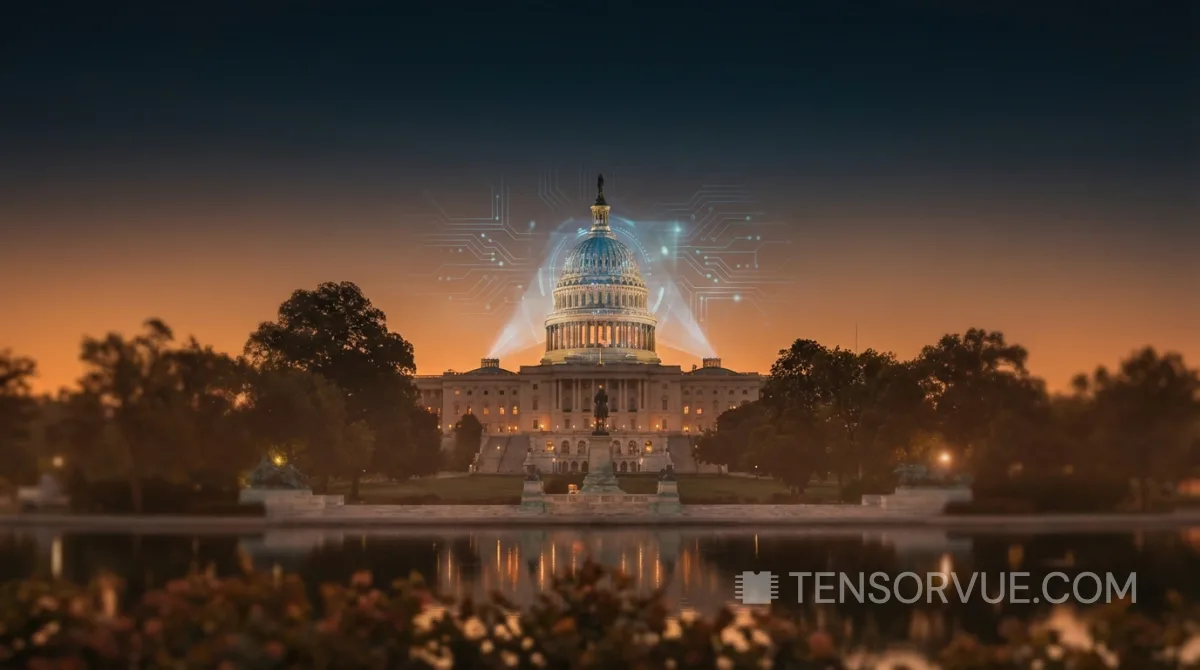
AI Super PAC Launches $10 Million Campaign Pushing for Uniform Federal AI Regulation
A newly formed political action committee backed by Silicon Valley investors deploys $10 million in advertising to advocate for a single national AI regulatory framework, opposing the growing patchwork of state-level laws.
Source: CNBC
Key Takeaways
A Silicon Valley-backed AI Super PAC has launched a $10 million campaign pushing for uniform federal AI regulation, arguing that the current patchwork of state-level rules creates compliance chaos for companies operating AI systems across jurisdictions.
A newly established political action committee, backed by prominent Silicon Valley investors and technology executives, has launched a $10 million advertising campaign aimed at persuading Congress to establish a uniform federal framework for artificial intelligence regulation. The initiative comes as states across the nation have begun enacting their own AI laws, creating what industry advocates describe as an unworkable patchwork of compliance requirements.
The Case for Federal Preemption
The campaign's central argument is straightforward: AI systems operate across state lines and through the internet, making state-by-state regulation inherently inefficient and potentially contradictory. Proponents argue that a single federal standard would provide clarity for companies developing AI products while ensuring consistent protections for users regardless of their geographic location.
The push mirrors debates that have occurred around data privacy regulation, where the absence of a comprehensive federal law has led to a fragmented landscape dominated by California's Consumer Privacy Act and a growing number of state-level alternatives.
The State-Level Landscape
The urgency behind the super PAC's campaign reflects the accelerating pace of state-level AI legislation. From California — home to most major AI companies — to Kentucky and dozens of states in between, legislatures have been drafting and enacting AI-related laws addressing issues ranging from algorithmic bias in hiring to disclosure requirements for AI-generated content and deepfakes.
While proponents of state-level action argue that these laws address genuine harms that Congress has been slow to regulate, the resulting compliance burden falls disproportionately on smaller AI companies that lack the legal resources to navigate dozens of different regulatory regimes simultaneously.
Industry Motivations and Criticisms
Critics of the super PAC's approach note that the technology industry's preference for federal regulation often correlates with a preference for lighter regulation overall. By advocating for a single federal framework, industry players may be seeking to forestall more stringent state laws — particularly those emerging from California, which has historically set the pace for technology regulation.
Consumer advocacy groups have expressed concern that a federal framework designed under significant industry influence could preempt stronger state protections without providing adequate substitutes, effectively weakening the overall regulatory landscape for AI safety and transparency.
Congressional Prospects
Prospects for comprehensive federal AI legislation remain uncertain. While bipartisan interest in AI regulation exists, Congress has struggled to reach consensus on the scope and specifics of any potential framework. The $10 million campaign represents a significant escalation in lobbying pressure, signaling the AI industry's determination to shape the regulatory environment before it is shaped for them by state legislatures and courts.
The outcome of this regulatory battle will have far-reaching implications not only for U.S. technology companies but for the global AI governance landscape, as the American approach to AI regulation typically influences policy discussions in other jurisdictions.