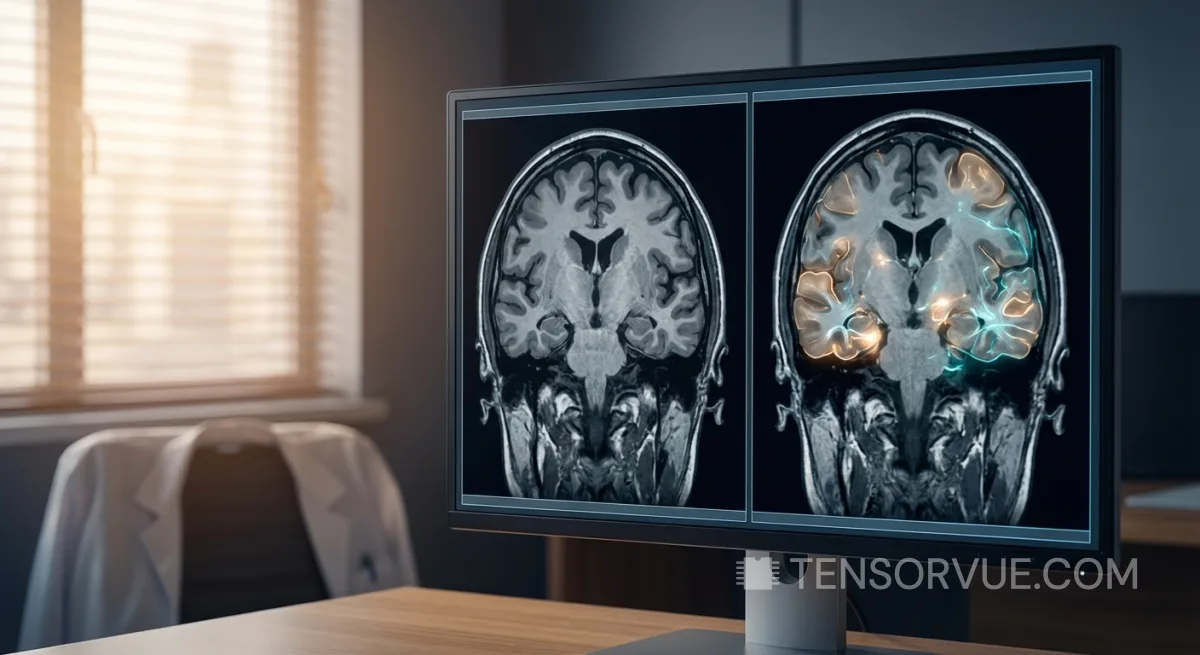
AI Medical Imaging Crosses 1,000 FDA Approvals as Diagnostic Accuracy Reaches 94% for Critical Conditions
With over 1,000 FDA-approved AI imaging tools now in clinical use, artificial intelligence is achieving diagnostic accuracy rates of 94% for breast cancer and heart failure — reducing false negatives by up to 30%.
Source: Nature Medicine
Key Takeaways
AI in medical imaging has crossed 1,000 FDA-approved applications with diagnostic accuracy reaching 94% for critical conditions. AI-supported mammography alone has increased breast cancer detection rates by 17.6%, marking a pivotal milestone for clinical AI adoption.
Artificial intelligence in medical imaging has reached a pivotal milestone: more than 1,000 AI-enabled imaging tools have now received FDA approval, constituting nearly 80% of all FDA-approved AI medical devices. As of early 2026, these systems are achieving diagnostic accuracy rates of up to 94% for critical conditions including breast cancer and heart failure — performance that, in specific applications, matches or exceeds human radiologists.
Clinical Impact by the Numbers
AI-supported mammography has increased breast cancer detection rates by 17.6% in real-world clinical studies. AI stroke detection software has proven twice as accurate as human professionals in examining brain scans, while simultaneously identifying the stroke's timeline — critical information for treatment decisions. Perhaps most remarkably, AI has detected 64% of epilepsy brain lesions that had been previously missed by radiologists, demonstrating the technology's ability to identify subtle patterns invisible to the human eye.
The Open-Source Frontier: Pillar-0
A significant development in the field is Pillar-0, an open-source AI model developed by researchers at UC Berkeley and UCSF that analyzes full 3D CT and MRI volumes directly — rather than processing individual 2D slices. The model outperforms existing approaches by more than 10% across numerous diagnostic tasks and imaging modalities, and its open-source availability makes advanced AI imaging capabilities accessible to healthcare institutions that cannot afford proprietary solutions.
From Tool to Clinical Standard
The next generation of AI diagnostic tools is moving beyond image analysis to sophisticated clinical reasoning. Systems now integrate multiple data sources — laboratory results, imaging studies, patient-reported symptoms, and electronic health records — to provide holistic diagnostic assessments. AI can predict disease diagnoses years in advance by recognizing specific biological signatures, and new models are detecting dementia with over 90% accuracy through EEG analysis alone.
The transition of AI from an experimental imaging tool to a clinical standard is accelerating. For healthcare systems facing radiologist shortages and growing imaging volumes, AI represents not merely an improvement in accuracy but a practical necessity for maintaining diagnostic capacity.