Science & Discovery
PULSE-HF: How an MIT Deep Learning Model Reads Your Heartbeat to Predict Heart Failure Decline a Year in Advance
Researchers at MIT, Mass General Brigham, and Harvard Medical School have developed PULSE-HF, a deep learning model that analyzes standard electrocardiograms to forecast whether heart failure patients will experience dangerous drops in cardiac function within twelve months — achieving accuracy scores between 0.87 and 0.91 across three independent hospital cohorts.

Google Launches Groundsource: How Gemini Turns Millions of News Articles Into a Global Flood Prediction Engine
Google Research has unveiled Groundsource, a first-of-its-kind framework that uses Gemini to extract 2.6 million historical flood events from global news archives. The resulting dataset now powers urban flash flood forecasts up to 24 hours in advance via Google's Flood Hub.
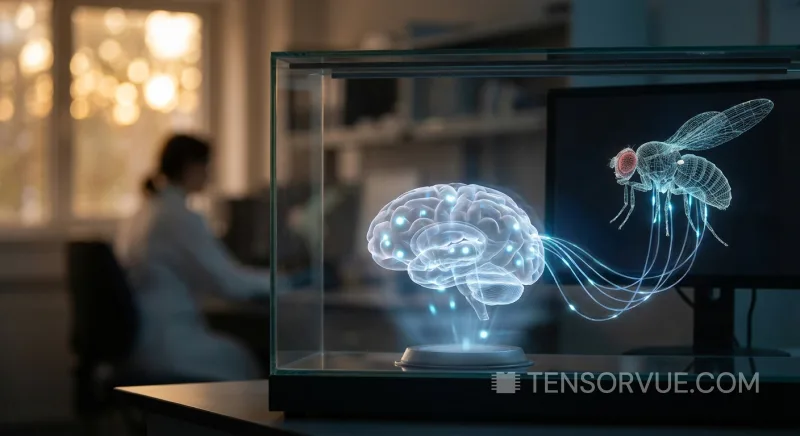
The First Embodied Whole-Brain Emulation: How a Startup Put a Copy of a Fly's Brain Inside a Virtual Body
Eon Systems claims to have achieved the first multi-behavior embodiment of a whole-brain emulation, connecting a 125,000-neuron Drosophila brain model to a physics-simulated body. We examine the science behind the demo, what it actually shows, and the vast gap between a fruit fly and the human brain the company ultimately wants to copy.
Six Variables at Admission, 91% Accuracy: How a Machine Learning Model Predicts Sepsis in Burn Patients Before Symptoms Appear
A Random Forest model trained on 6,629 patients from the German Burn Registry achieves 0.91 AUROC for sepsis risk prediction using only six variables available at ICU admission — a streamlined approach that could transform early triage in burn intensive care units worldwide.
Evo2 Published in Nature: The 40-Billion-Parameter AI Model That Reads, Predicts, and Writes DNA Across All Domains of Life
Arc Institute, NVIDIA, and collaborators from Stanford, UC Berkeley, and UCSF have published Evo2 in Nature — a 40-billion-parameter open-source DNA foundation model trained on 9.3 trillion nucleotides that can predict pathogenic mutations with over 90% accuracy and generate entirely new genomes.
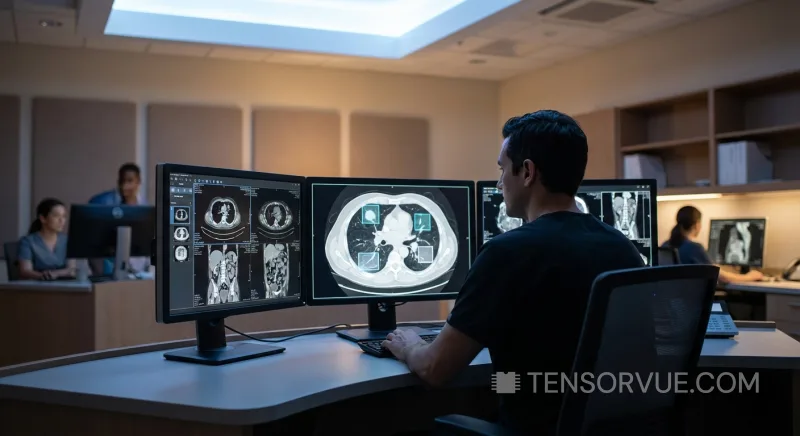
AI in Radiology Surpasses 1,000 FDA-Cleared Algorithms as JACR Focus Issue Examines How Automation Is Reshaping Diagnostic Workflows
The Journal of the American College of Radiology published a special focus issue on March 3, 2026, examining how AI is transforming radiology workflows — arriving at a moment when AI-powered medical imaging has surpassed 1,000 FDA-cleared algorithms and achieved diagnostic accuracy rates reaching 94% for critical conditions.
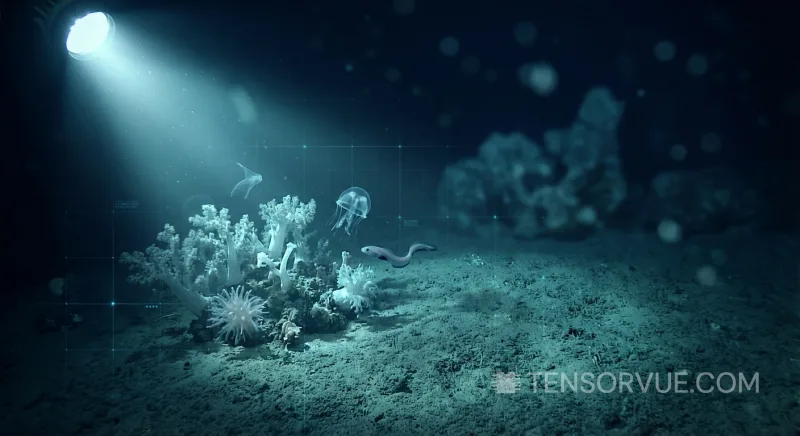
Deep Vision: How AI Processed 58,000 Seafloor Images in Ten Days to Map the Atlantic's Most Vulnerable Ecosystems
The Deep Vision project is using artificial intelligence to analyze over 58,000 deep-sea images in under ten days — a task that would take human analysts months — to create the first comprehensive maps of vulnerable marine ecosystems across the entire Atlantic basin, providing critical data for marine conservation and protected area designation.

AI Discovers Hidden Signal of Liquid-Like Ion Flow Inside Crystals, Accelerating the Hunt for Next-Generation Battery Materials
Researchers have used a machine learning pipeline to predict Raman spectra and identify a previously undetected low-frequency signal in solid-state battery materials — a spectral signature of liquid-like ion motion inside crystals that could dramatically accelerate the discovery of superionic conductors for next-generation batteries.
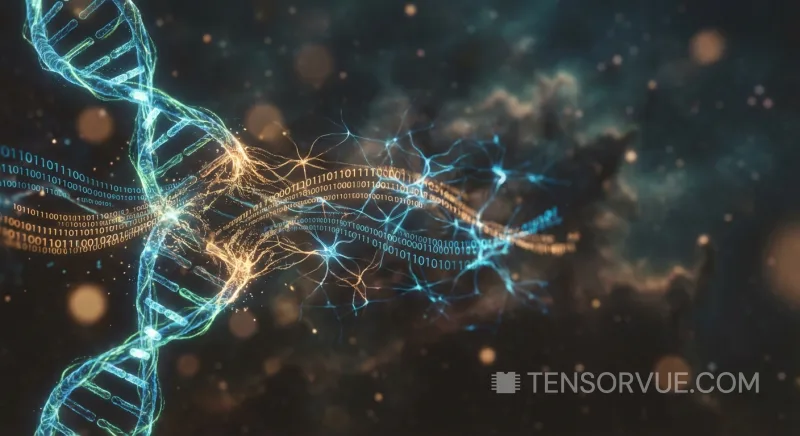
Evo2: The AI Model Trained on Trillions of DNA Letters That Could Design New Life Forms
Scientists have introduced Evo2, a foundation model trained on 9.3 trillion nucleotide tokens — the equivalent of reading every known genome multiple times. The model can analyze and generate complete genome sequences, opening doors to synthetic biology at unprecedented scale.